Your refrigerator is the silent partner that keeps breakfast fresh and leftovers safe. Most days it hums along without fuss, yet even the toughest appliance shows warning signs before it quits. Ignoring those hints can cost lost groceries, wasted energy, and an urgent repair bill. By spotting small changes—like extra frost on freezer walls or milk that sours too quickly—you gain time to fix issues while they’re small. The seven signs below explain what to look for, why it happens, and simple checks you can do at home. We’ll tuck in some practical technical facts, so you know when a screwdriver is enough and when a qualified technician should step in. Read on, and keep both food and finances in good shape.
When Your Food Spoils Faster Than Expected
If yogurt turns sour or produce wilts days before its date, temperature control may be slipping. Modern fridges aim for 37 °F (3 °C) in the fresh‑food section and 0 °F (-18 °C) in the freezer. Any higher, and microbes thrive.
- Quick check: Keep an inexpensive fridge thermometer on the middle shelf; note readings morning and night.
- Likely causes:
- A worn-out door gasket is letting warm air seep in.
- A faulty thermistor misreads the cabinet temperature, so the control board cuts cooling too soon.
- Poor air flow from blocked vents, often hidden by over-packed shelves.
- DIY steps: Wash the gasket with mild soap and warm water, then run the “dollar‑bill test.” Slip a bill halfway in the closed door; if it pulls out easily, the seal is weak. Rearrange food so nothing presses against the rear vents.
If the thermometer still reads above target, the control board or thermostat needs professional attention.
Ice Build-Up Creeps Over Freezer Walls Rapidly
A frost-free freezer should only show a light powdering of snow. Thick, white sheets of ice signal moisture that flash‑freezes each time the door opens.
- Technical note: Frost-free models have a defrost heater that warms evaporator coils several times a day. A failed heater keeps coils icy, forcing the compressor to run longer.
- Common triggers:
- Torn or sagging door seal inviting humid kitchen air inside.
- Blocked defrost drain channel, causing meltwater to refreeze on shelves.
- The door was left ajar by tall food containers.
- Try this first:
- Inspect and clean the drain hole with a turkey baster of warm water.
- Check the door seal’s corners for gaps.
- Avoid stacking items so high that they press against the light switch plunger.
Persistent frost after 24 hours points to a failed defrost timer, heater, or temperature fuse—parts best handled by a repair specialist.
Unusual Humming Clicks Or Buzzes Keep Returning Daily
Every fridge hums, but sudden new sounds deserve notice. A sharp click every few minutes means the start relay struggles to fire the compressor, while a high-pitched whine hints at a worn evaporator fan.
- Listen for patterns:
- Click‑off‑click cycling: relay trouble.
- Whirr‑whirr‑stop behind the freezer wall: fan blades hitting ice.
- Deep rattle under the unit: compressor mounts loosening.
- What to try:
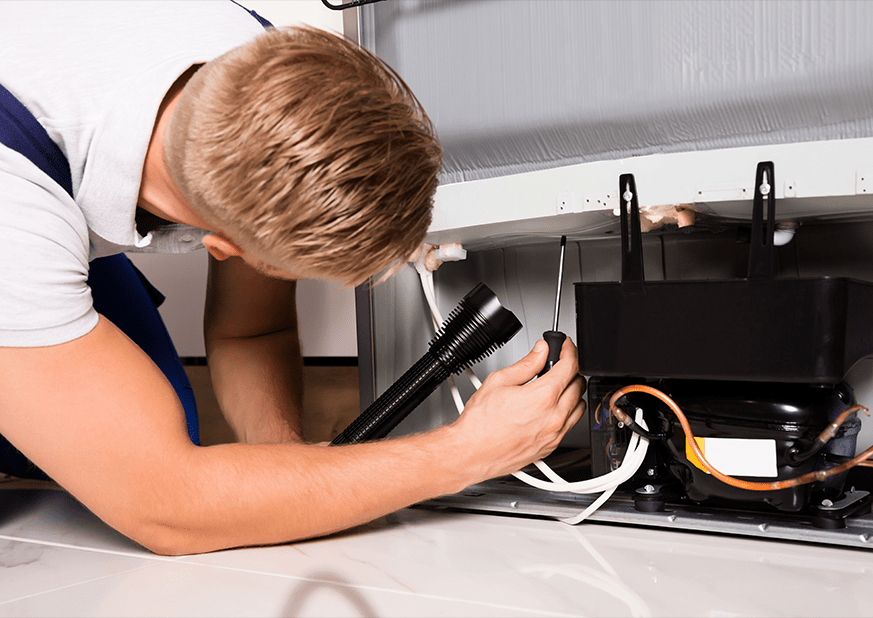
- Pull the plug, remove the rear lower panel, and vacuum lint from the condenser fan blades.
- Verify the fridge stands level; unbalanced feet let the compressor vibrate against panels.
- Know your limits: If buzzing grows louder and the cabinet warms, shut the fridge down and call a technician. A failing compressor draws extra current and can overheat wiring.
Condensation Drips Around Door Seals And Shelves Often
Moisture beads on shelves or puddles on the floor signal warm air reaching cool surfaces.
- Key areas to inspect:
- Door gasket: Look for cracked sections or hardened rubber.
- Door alignment: Tighten top hinge screws; a sagging door breaks the seal.
- Drain pan: Slide it out and rinse; algae can block the tube, so water overflows.
- Handy facts: Many units have an anti-sweat heater around the door frame. When the control board detects high humidity, it warms the frame slightly. A failed heater keeps the frame cold, causing sweat.
- Simple fixes:
- Replace brittle gaskets—kits often snap into place with no glue.
- Keep room humidity under 60 % by running a kitchen exhaust fan while cooking.
Persistent dripping may involve a faulty door‑frame, heater wire, or control sensor—issues that demand a multimeter and a pro.
The Motor Runs Constantly Without Taking Breaks
A healthy unit cycles on and off, resting once the set temperature is reached. Continuous running burns energy and shortens compressor life.
- Check these points:
- Dirty condenser coils under or behind the fridge trap heat. Unplug the fridge and brush coils every six months.
- Freezer set too low. Each degree below 0 °F drives energy use up to 4 %.
- The door often opened or was held open while loading groceries.
- Technical insight: If coils are clean and settings are normal, a bad condenser fan motor may be the culprit. Without airflow, the compressor can’t shed heat and never shuts off.
- DIY test: Feel for warm air blowing from the rear base grille; if absent, fan blades may be jammed by pet hair.
When the compressor still races nonstop after cleaning and resetting temperatures, compressor valves or refrigerant charge should be checked by a certified technician with proper gauges.
Temperature Dial Seems Correct, Yet Items Freeze
Finding lettuce turned into an ice brick is both wasteful and annoying. When fresh food freezes even with the dial at a modest setting, the air control system is likely misbehaving.
- Probable causes:
- Damper stuck open: This flap regulates the cold air entering the fresh‑food compartment from the freezer.
- Faulty thermistor: Sends wrong readings, so the control board thinks the cabinet is warm and pumps in more cold air.
- Poor placement of temperature-sensitive items: Thin liquids stored near upper rear vents freeze first.
- What you can do:
- Move delicate produce toward the center and bottom shelves.
- Listen for the damper motor clicking; silence can mean it’s stuck open.
- Unplug the fridge, remove the damper cover, and check for ice buildup blocking the flap.
If ice returns the next day, electronic sensors or the main board need an expert’s diagnosis.
Energy Bills Jump Higher After Normal Refrigerator Use
An aging fridge can quietly double its energy draw long before it quits. Keep an eye on utility statements; a sudden spike often tracks back to cooling troubles.
- Energy facts:
- Modern 18 cu ft models average 400–500 kWh per year.
- A failing compressor can push usage above 800 kWh, adding thousands of rupees or tens of dollars yearly.
- Signs of energy waste:
- Cabinet walls feel hot to the touch.
- Freezer temperature creeps above 10 °F, so the compressor runs longer.
- Interior LED lights dim as voltage drops from overloaded circuits.
- Simple steps:
- Use a plug-in energy monitor for a week to record daily kWh.
- Vacuum coils and ensure 2 inches of clearance behind the unit.
- Replace cracked door seals that leak cool air.
If consumption stays high after these measures, a service call may save more money than limping along with soaring bills.
Conclusion—Act Before A Small Fault Becomes Big Trouble A refrigerator rarely shuts down out of the blue; it sends clues. Spoiled food, loud clicks, frost mountains, or climbing bills each hint at a fixable fault. Catching those signals early keeps groceries safe and energy use low. When home checks don’t solve the problem—or if removing panels feels risky—call a trusted professional. Scott’s Homecare Heating & Cooling offers refrigerator repair services carried out by trained technicians who understand cooling systems inside and out. Acting today keeps your kitchen running smoothly tomorrow